Samuel Davis
Before the first stalk on unfamiliar ground, decide what matters more: filling an opportunity or making a decision you can defend afterward. An animal appears near a fence line, the wind is unreliable, and your guide has not confirmed the boundary or the day's allocation. The practical answer is to pause. That delay protects safety, legality and the quality of the hunt while giving you a repeatable method for similar moments throughout an African safari hunting trip.
Start with the property, not the opportunity
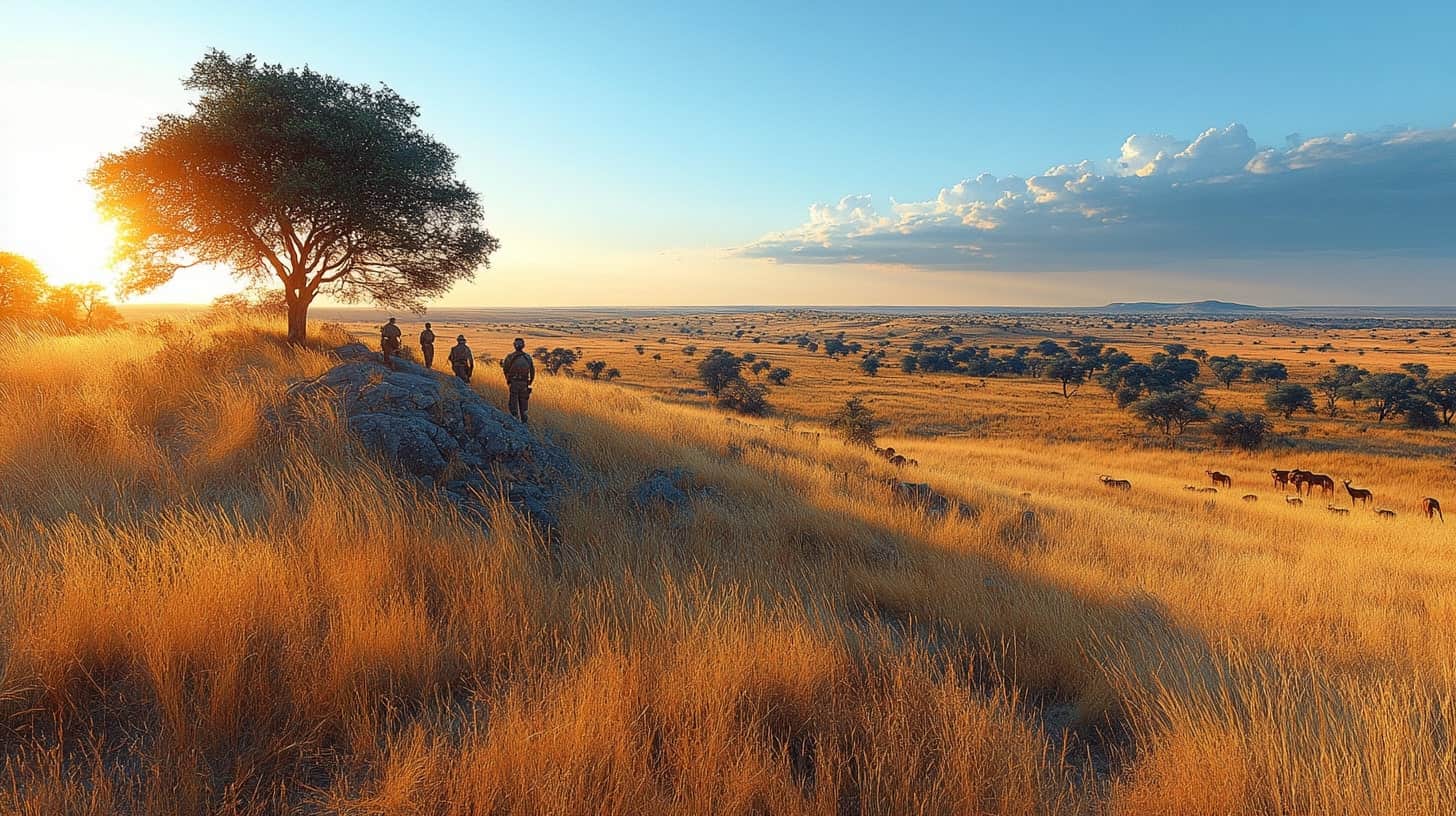
A new property has its own boundaries, access routes, habitats, neighbours and operating rules. Do not assume that a familiar species, rifle setup or stalking habit transfers neatly from one place to another.
During the arrival briefing, ask to see the boundaries on a map or have them explained clearly on the ground. Confirm where hunting is permitted, which areas are closed and how boundary uncertainty is handled. Ask about roads, homes, livestock, water points and other locations where a shot may be unsafe or inappropriate.
The everyday test is simple: could you explain your exact location and backstop to the guide before taking the shot? If not, you need more information. Open-looking ground can conceal a road, neighbouring property or prohibited zone.
Turn guide communication into a shared process
Good guide communication is more than listening for a range or species name. It is an agreement about what each person will confirm before a decision is made.
Before heading out, establish signals for stop, wait, move, unload and follow. Ask how the guide prefers you to indicate that you are ready, uncertain or uncomfortable. Agree that either person can call off a stalk without embarrassment. A clear phrase such as "I am not certain" is more useful than a hurried guess.
When an animal is spotted, ask focused questions: Is it the intended animal? Is the location legal? Can it be identified confidently? Is the angle safe? Is the distance within your practiced ability? Has the guide confirmed that it meets the agreed brief? Final responsibility for the shot remains yours, but a professional conversation reduces avoidable mistakes.
Check regulations before travel and again on arrival
Hunting regulations, permit conditions, transport requirements and firearm rules can change. Requirements may also differ by country, province, species, season, property and the way equipment enters or leaves the country. Treat an old forum post or a friend's previous experience as a starting point, not authority.
Confirm current requirements through the relevant official government or wildlife authority, your travel documents and the licensed operator or outfitter handling the trip. Keep permits and essential documents in a secure digital location as well as offline. Ask who is responsible for each administrative step and what you must carry in the field.
Review conservation-related restrictions as well. A quota, sex- or age-based rule, closed season or reporting obligation is not a minor technicality. If a condition is unclear, stop and ask before the hunt continues. Recheck requirements close to departure and follow the latest official guidance.
Use a decision threshold for the shot
Ethical field decisions become easier when you define your limits before pressure arrives. Your threshold should account for identification, distance, position, visibility, wind, terrain, your practice and the likely consequence of a poor hit.
Suppose the guide points out an animal near a boundary. You can see enough to be interested, but the wind has shifted and vegetation partly screens it. Do not negotiate yourself into a shot. Ask for a better position, wait for clearer conditions or leave the opportunity. Passing is sound when any essential element remains uncertain.
Preparation should also include a realistic review of fitness, heat, hydration, hearing protection, footwear and fatigue. Tiredness can affect judgment before it feels dramatic. Tell the guide early if discomfort, poor visibility or equipment trouble is affecting your ability to make a clean decision.
Keep one field checklist that earns its place
A short checklist is useful when it prompts decisions rather than repeating packing advice. Review it before each outing:
– Location: Do I know the boundary, safe direction and backstop?
– Legality: Is the target permitted under current rules and the property's conditions?
– Identification: Am I certain of the animal and the agreed criteria?
– Ability: Are the distance, angle and visibility within my limits, given my physical condition?
– Communication: Has the guide heard my concern, and can either of us stop the stalk?
– Aftercare: Do we know the procedure for tracking, reporting, tagging and recording the harvest?
The checklist should slow you only when real uncertainty exists. It is not a substitute for training or judgment, but it provides a consistent reset when excitement narrows your attention.
Let conservation shape what happens after the shot
Responsible hunting is judged by more than the moment of firing. Ask in advance how the harvest will be documented, transported and used, and which records must be completed. Follow the required process for tags, inspections and reporting rather than relying on memory at the end of a long day.
Conservation ethics also include restraint. Do not treat every legal opportunity as an obligation to shoot. Consider the management purpose explained by the guide, the animal's condition, the likelihood of a clean recovery and whether the opportunity matches the original plan. If the reasoning is unclear, request an explanation before proceeding.
Back at camp, record what you learned: where uncertainty arose, which question prevented a mistake and what you would confirm earlier next time. That habit improves future planning without turning the trip into a checklist exercise.
The strongest preparation for a Kalahari hunting safari is not an attempt to control every variable. It is a shared standard for stopping, checking and choosing carefully when conditions change. On unfamiliar property, that standard protects the animal, the people involved, the law and the conservation work that makes hunting possible.